The Big Conversation: Interrupting Wilful Blindness and Choosing Courageous Leadership

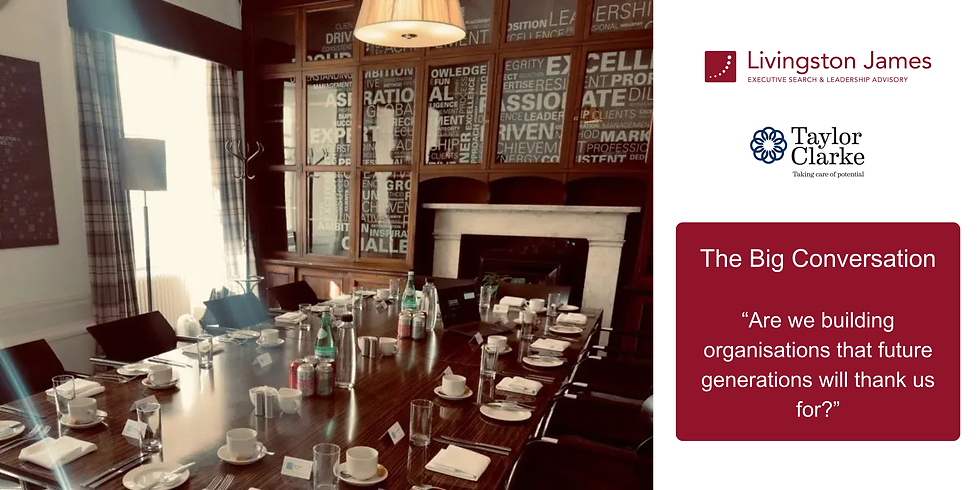
Following our first Big Conversation session, we knew we were leaning into more uncomfortable territory for our second session. The invitation posed a challenging question:
In a world where avoiding uncomfortable truths is easier than naming them, how do leaders interrupt wilful blindness and build cultures that confront harmful behaviour, honestly, collectively, and courageously.
What followed was one of the most thoughtful, searching leadership conversations I’ve been part of, honest, nuanced, and grounded in lived experience.
Power, Intent and the Role of Soft Power
Early in the conversation, we explored the relationship between power and intent. One insight landed particularly strongly: that power does not always come from authority or position. Sometimes it begins with honesty.
There was a shared recognition that soft power, curiosity, listening, moral courage, plays a vital role in shaping culture. Especially in moments where formal authority alone cannot shift behaviour.
And yet, we also named a harder truth: that within every organisation there are pockets of resistance to change, described memorably as the permafrost of an organisation. Cultural change does not melt evenly. Some areas thaw quickly; others remain stubbornly frozen.
Culture Is Not HR’s Job Alone
A powerful theme emerged around the role of HR. Often, HR holds the cultural conundrum: how to protect and steward values while trying to influence behaviour across the system. But the group was clear, culture cannot sit with HR alone.
True cultural stewardship belongs to the whole leadership system. The role of Chairs and Boards was highlighted as particularly influential in setting tone, reinforcing expectations, and ensuring accountability.
When culture is owned only in theory, rather than embodied in leadership behaviour, misalignment creeps in. Everyone has an active role to play in building and maintaining culture.
When Things Go Well… and When They Don’t
Another striking insight was how leadership behaviour shifts depending on context. When organisations are profitable or progressing well, some leaders unconsciously step back from actively shaping culture, assuming momentum will carry things forward. But when pressure hits, behaviours change. Fear rises. Control tightens. And it’s often in these moments that values and behaviour drift furthest apart. Tough times reveal the truth of leadership.
Good leaders and managers were described not as those who avoid difficulty, but those who spot areas for development, in people and in the organisation, and address them early, before issues calcify.
The Cost of Consensus and the Need for Real Dialogue
The group challenged the idea that consensus is always healthy. In some cases, the pursuit of consensus can shut down dialogue and create rigid, binary positions, right vs wrong, for vs against, us vs them.
What’s needed instead is more discussion, not less. Space for difference of opinion is healthy. An acceptance that two things can be different and true at the same time. A willingness to thaw deeply held assumptions rather than defend them.
Trust, Integrity and the Impact of Inaction
One of the most personal reflections came when participants spoke about trust.
When CEOs or senior leaders notice harmful behaviour and choose not to act, something breaks. Trust erodes. Integrity is questioned. People disengage.
Conversely, when leaders notice and deal with difficult behaviour, even imperfectly, people feel safer, prouder, and more willing to stay and contribute.
We don’t leave organisations lightly. Often, we leave because we’ve lost faith that uncomfortable truths will ever be addressed.
Listening and the Risk of White Noise
Listening emerged as both a solution and a risk.
Listening to understand, not to rebut, was described as a potent antidote to misunderstanding. Many harmful behaviours sit atop unmet needs, fear, or unresolved history. But the group also named a real tension: too much listening without action creates white noise. When organisations gather endless feedback but fail to prioritise or act, frustration grows. People feel unheard, not because they weren’t listened to, but because nothing changed. Listening can help illuminate uncomfortable truths, but leaders must make choices. Not everything can be fixed at once.
Wilful Blindness: Seeing and Choosing Not to Act
Wilful blindness became one of the most powerful threads of the conversation.
We distinguished it clearly from a blind spot. Wilful blindness is not about not knowing. It is about knowing and choosing not to act or avoiding really knowing. A conscious decision to look away. This is where leadership becomes moral.
The group explored the difference between physical harm and moral harm, and how moral harm, left unchallenged, corrodes culture quietly and persistently.
The phrase “speaking truth to power” was unpacked, reframed as a collective responsibility. Soft power matters most at the frontline, but only when hierarchical power is willing to listen.
Metrics, Focus and What We Choose to See
There was also a sharp critique of single-metric leadership. A relentless focus on profit, performance, or one dominant indicator can blind leaders to organisational wellbeing. What gets measured gets managed, but what isn’t measured often gets ignored. Thriving organisations need multi-dimensional measures of success. Otherwise, leaders may optimise one outcome while unknowingly damaging the system that sustains it.
The Truth Mirror and Choosing the Right Battles
Towards the end, we turned the lens inward. “Nobody wants to call their own baby ugly” a phrase that captured how teams avoid facing their own flaws. Looking in the truth mirror is uncomfortable and vulnerability only matters when it’s authentic.
We asked a final, deceptively simple question:
When was the last time you avoided a simple uncomfortable conversation, and what did it cost you later?
Every leader in the room could answer it.
And yet, there was compassion too. We acknowledged that leaders have finite energy and resilience. Courage doesn’t mean addressing everything, all the time. It means choosing the right battles, and fully committing to them.
Choosing What We Tolerate
The conversation closed with a quiet but powerful realisation:
We are all accountable for what we choose to address, and what we choose to ignore.
Leadership is not about perfection. It is about making conscious choices, putting energy behind what truly matters, and refusing to let discomfort become an excuse for inaction. Wilful blindness is rarely accidental. And courage, while difficult, is always a choice.
What Comes Next?
The Big Conversation will continue.
This event was a powerful reminder that leaders crave real connection and space to think.
At Taylor Clarke and Livingston James, we’re committed to holding that space, for curiosity, reflection, and challenge, and to continuing to ask the big questions that shape how we lead.
Because the way we lead today will be the legacy we leave for tomorrow